
How to Get Rid of Canadian Geese: What Actually Works (and What Doesn’t)
If you’re searching for how to get rid of Canadian geese, chances are you’ve already tried a few things. Maybe you’ve clapped, shouted, sprayed the hose, or invested in one of those plastic coyotes that the geese now use as a landmark. You’re not alone. Property owners, facility managers, HOAs, golf courses, and municipalities across the country are all asking the same question.
Here’s the good news: getting rid of Canada geese (yes, that’s their proper name, and more on that in a minute) is absolutely possible. The key is understanding why they chose your property, why most deterrents fail, and what actually convinces geese to leave for good. After 25+ years in the Canada goose control business, we’ve seen it all. So, let’s walk through it, honestly.
First Things First: They’re Canada Geese, Not Canadian Geese
It’s one of the most common mix-ups in the bird world. The big black-necked, white-cheeked birds taking over your lawn are officially called Canada geese (Branta canadensis), not “Canadian geese.” They don’t carry passports, and plenty have never set a webbed foot in Canada. In fact, a growing share of these birds are now resident geese: year-round locals that have given up migration entirely.
That distinction matters. Resident Canada geese now make up the majority of the U.S. population, and without the pressures of migration or harsh winters, they settle in, raise goslings, and return to the same properties season after season, often in growing numbers.
So, if it feels like the geese on your property aren’t leaving anymore, you’re not imagining it. They aren’t.
Why Are Geese on Your Property in the First Place?
Geese aren’t random. They’re strategic. If they’ve chosen your property, it offers the three things they value most:
- Food. A well-manicured lawn is an all-you-can-eat buffet. Geese graze on tender, fertilized grass all day, and each goose can produce up to two pounds of droppings a day in return. That’s not a fair trade.
- Water. Retention ponds, lakes, fountains, and water hazards give geese a safe place to escape predators and raise their young.
- Sightlines. Geese love wide-open spaces where they can spot danger from a distance. Corporate campuses, golf courses, athletic fields, parks, cemeteries, and apartment communities are practically designed to their specifications.
In other words, we’ve built a perfect goose habitat. Effective goose control means making your property feel a lot less like a resort and a lot more like a risk.
Why You Need to Act: The Real Cost of a Goose Problem
A few geese might seem harmless, even charming. But goose problems don’t stay small. A single nesting pair can become a flock of dozens within a couple of seasons, bringing:
- Droppings everywhere. Waste on sidewalks, patios, greens, and fields can carry bacteria, including E. coli, a genuine health and water quality concern.
- Property damage. Geese tear up turf as they graze. We’ve met property owners spending five figures a year just repairing landscape damage.
- Aggression and liability. During spring nesting season, geese defend their nests aggressively. Hissing and chasing people isn’t rare; it’s routine, and a real liability concern for businesses, schools, and communities.
- Slip-and-fall hazards. Droppings on walkways and entrances are a lawsuit waiting to happen.
The longer geese stay, the more attached they become. Geese imprint on the property where they were raised and return year after year. Which brings us to the most important rule in goose control: the sooner you act, the easier the job.
How to Get Rid of Canada Geese: The Common Methods (and Their Limits)
Let’s run through the options most people try, roughly in the order they usually try them.
1. Scare Tactics and Decoys
Plastic coyotes, owl statues, dog cut-outs, mylar balloons, flashing lights, noise cannons… we’ve heard about them all. One of our very first clients, a golf course president, even rigged a stuffed Border Collie on a ten-foot pole and drove it toward the geese. The geese simply stepped aside and let him pass.
Geese are smart, excellent observers. A predator that never moves or hunts stops being a predator within days. Scare tactics may buy you a week or two of relief before the geese adapt.
2. Grass Treatments and Repellents
Liquid repellents (usually methyl anthranilate, a grape-based compound) make grass taste unpleasant to geese. They can help in small areas, but they wash away with rain and irrigation, require constant re-application, and get expensive fast. And they do nothing about the pond that attracted the geese in the first place.
3. Physical Barriers and Habitat Modification
Fishing line over ponds, low fencing along shorelines, and taller vegetation buffers can make a property less convenient for geese. They’re worth considering as part of a bigger plan, but on their own, they rarely solve an established goose problem.
4. Nest and Egg Intervention
Regulated programs like egg addling and egg removal can slow population growth, but this is strictly controlled territory. Canada geese are protected under the federal Migratory Bird Treaty Act, and any interference with nests or eggs without proper registration and permits is illegal. It’s a job for licensed professionals following humane, wildlife-agency-approved protocols, and it works best as part of a broader goose control program.
The pattern here is simple: geese habituate to anything that doesn’t behave like a real predator. To get rid of Canada geese for good, you need something they instinctively can’t ignore.
Tired of trying gimmicks that geese figure out in a week? Contact Geese Chasers for a free quote, or call 1-866-98-GEESE (43373). We’ll assess your property and build a plan that actually works.
The Method That Actually Works: Trained Border Collies
Twenty-five years ago, a Border Collie named Boomer cleared 300 geese off a New Jersey golf course fairway in a matter of minutes, and a business was born. That same approach remains the gold standard in humane, effective Canada goose control. Here’s why.
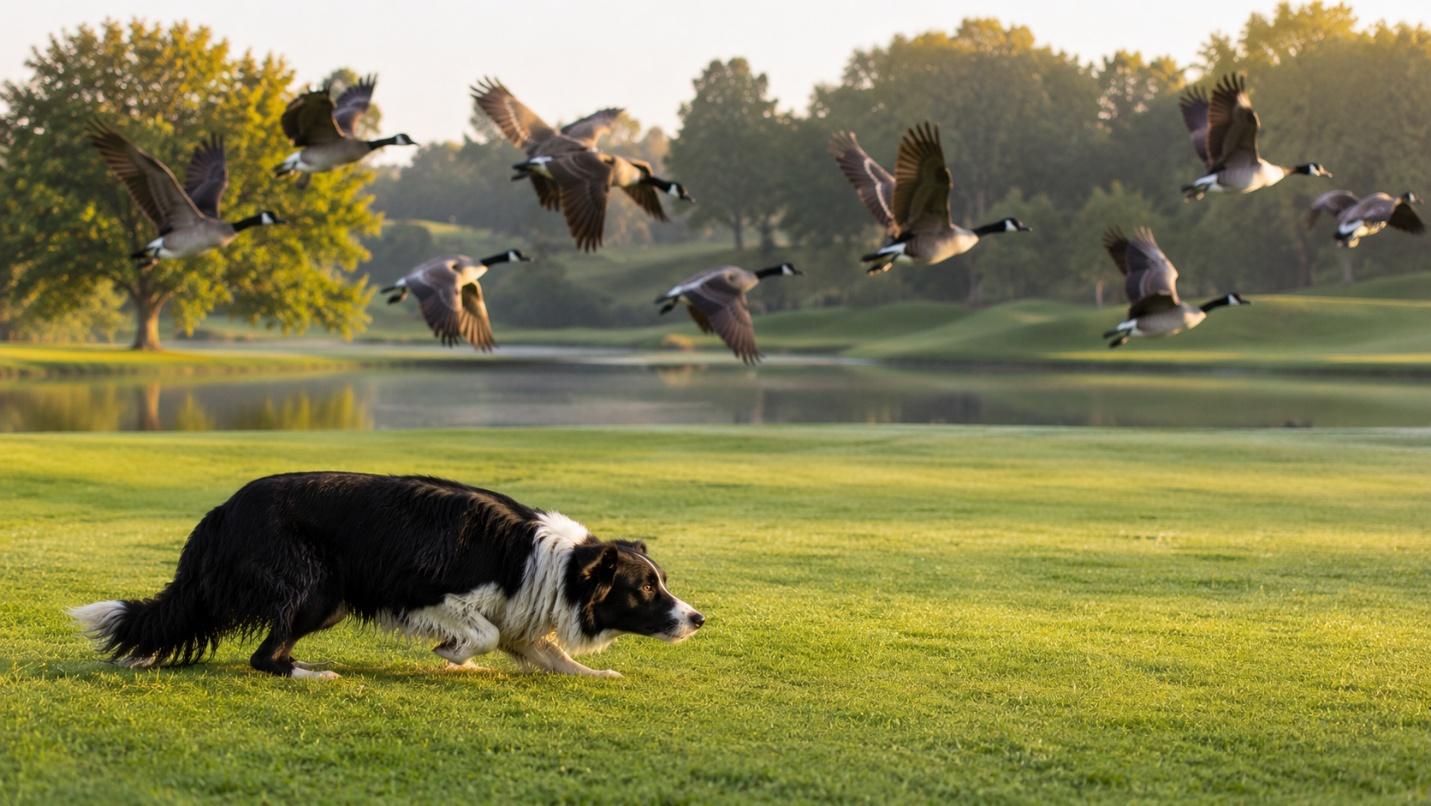
Border Collies are herding dogs with a distinctive, low, stalking posture, the same body language as a fox or coyote on the hunt. To a goose, a working Border Collie doesn’t look like a pet. It looks like a predator. And unlike a plastic decoy, this predator moves, adapts, swims, and shows up again and again.
That last part is the secret. A single chase scatters geese; consistent, repeated visits retrain them. Geese learn a simple lesson: this property is not safe. They stop landing, stop nesting, and relocate to safer ground, unharmed. The dogs never touch the birds. They don’t have to. Instinct does all the work, and it’s the one method geese never get used to, because the threat feels real every single time.
What a Professional Goose Control Program Looks Like
At Geese Chasers, a typical professional goose control program starts with an assessment of your property: where the geese feed, loiter, and nest, and what’s drawing them in. From there, our trained handlers and Border Collies visit on a strategic schedule, frequently at first, then tapering as the geese get the message and move on.
For properties with nesting activity, we handle the regulated side of goose control the right way, with proper permits and protocols. And because resident geese are a year-round problem now, we build programs for long-term results, not one-off visits. It’s the approach that’s kept our very first clients goose-free for over two decades, and earned us features in The New York Times, The Times of London, Discovery, Animal Planet, and more.
Quick Answers: Getting Rid of Canada Geese
What is the fastest way to get rid of Canada geese? Trained goose-control dogs. A Border Collie can clear a flock in minutes, and a consistent program convinces geese to abandon the property entirely, usually within weeks.
Is it legal to remove Canada geese from my property? Yes, as long as it’s done humanely. Canada geese are federally protected, so any method that harms the birds or disturbs their nests without permits is illegal. Humane deterrence with trained dogs is fully legal and endorsed by wildlife agencies, because the birds are never touched or harmed.
Will geese come back after they leave? They’ll test the property occasionally, which is why professional programs include maintenance visits. Once geese firmly associate your property with a “predator,” return visits become brief and rare.
Do goose deterrents like decoys and sprays work? Temporarily, at best. Geese habituate to static deterrents quickly, and repellents wash away. They’re Band-Aids, not solutions.
Ready to Take Your Property Back?
Geese are stubborn, but they’re no match for instinct. Whether you manage a golf course, corporate campus, HOA, school, park, or your own backyard on a pond, the solution is the same one that’s worked for over 25 years: humane, professional goose control powered by trained Border Collies.
Get your free quote today. Contact Geese Chasers or call 1-866-98-GEESE (43373) and find out why we’re Your #1 Name in Canada Goose Control.™